
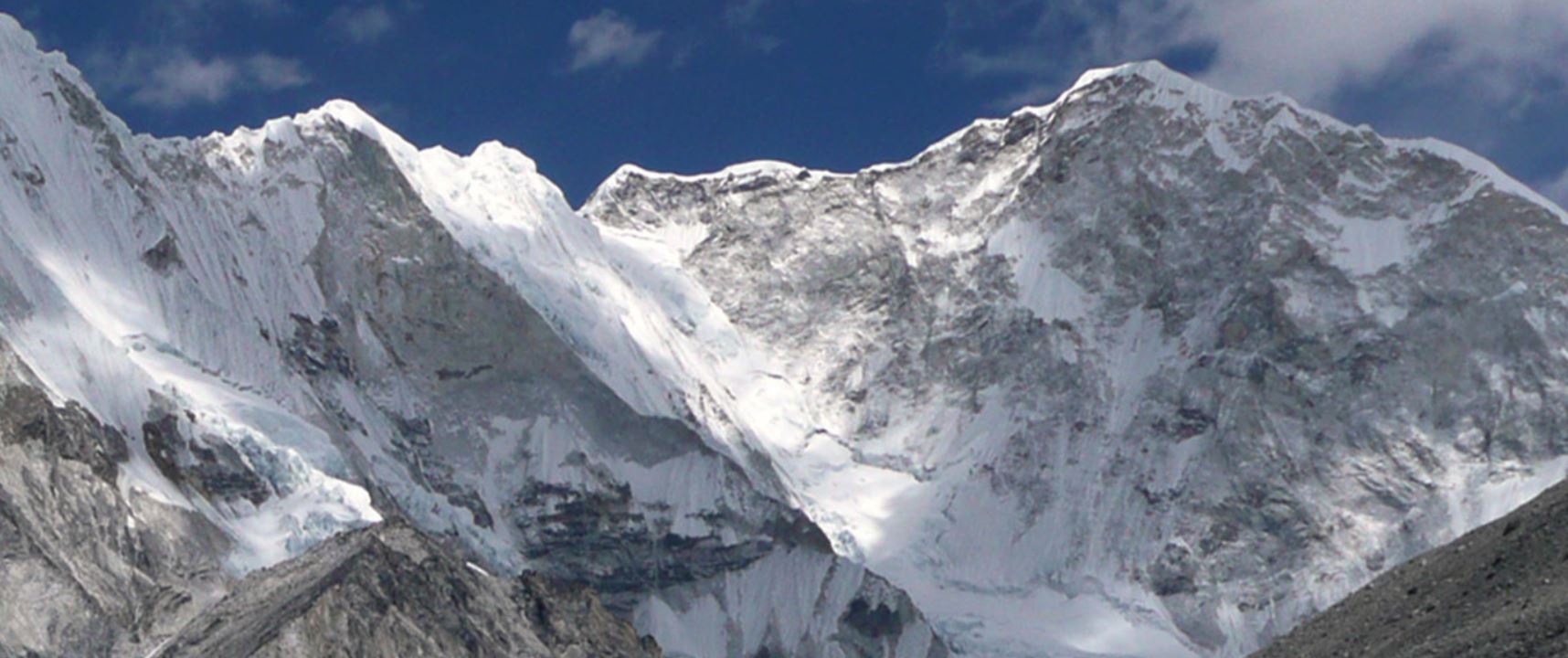
Baruntse Expedition (7,129m) – 2026/2027
Duration
35 days
Activities
Trekking and Climbing
Max Altitude
7,129m (23,389ft.)
Group Size
02-15
Expedition Overview
Facts of the trip
-
-
Arrival On
Kathmandu, Nepal
-
Departure From
Kathmandu, Nepal
-
Accommodation
Hotel, Teahouse Lodge - Tented Camp
-
Meals
Breakfast, Lunch, Dinner
-
Best Time
September-November/March-May (Autumn/Spring)
-
Transportation
Private Car, Jeep and Domestic Flight
Baruntse Expedition (7,129m) – 2026/2027
Standing at 7,129 meters (23,389 feet) in the remote Hongu and Barun river valleys of eastern Nepal, Baruntse is a stunning, symmetrical snow peak framed by four of the world’s highest mountains: Everest, Lhotse, Makalu, and Cho Oyu. The Baruntse Expedition (7,129m) is widely recognized as the premier 7,000-meter peak in the Himalayas—combining structural expedition logistics with approachable technical terrain, making it the ultimate training ground for climbers aiming to step up to 8,000-meter giants.
Baruntse Expedition Overview
| Metric / Detail | Quick Facts |
| Elevation | 7,129 meters / 23,389 feet |
| Location | Makalu-Barun National Park, Mahalangur Himalayas, Nepal |
| First Ascent | May 30, 1954 (New Zealand team led by Sir Edmund Hillary, including Colin Todd and Jim Gibson) |
| Best Climbing Seasons | Spring (April–May) & Autumn (September–October) |
| Standard Climbing Route | Southeast Ridge |
| Trip Duration | 30 to 35 Days |
Why Choose the Baruntse Expedition?
- The Ultimate 7,000m Stepping Stone: Baruntse features true high-altitude elements—crevasse navigation, steep snow walls, and fixed-line climbing—without the extreme physiological hazards found in the 8,000m Death Zone.
- Wild Wilderness Approach: The trek winds through the remote Hinku and Hongu valleys inside Makalu-Barun National Park, completely bypassing the crowded trails of the standard Everest Base Camp track.
- Acclimatization Pairing: Many teams combine Baruntse with a quick ascent of Mera Peak (6,476m) or crossing the challenging Amphu Labtsa Pass, creating a diverse and rewarding mountaineering circuit.
Highlights:
-
Elevation: 7,129 meters (23,389 feet) – a true expedition-grade Himalayan peak.
-
Location: Makalu-Barun National Park, surrounded by four of the world’s six highest mountains.
-
Route Character: Features the iconic Southeast Ridge combining glacier travel, steep snow/ice walls, and an exposed ridge line.
-
First Ascent: Conquered in 1954 by a legendary team led by Sir Edmund Hillary.
-
Ideal Objective: The premier choice for experienced mountaineers looking to build advanced ice, mixed climbing, and high-altitude endurance skills before tackling 8,000m peaks.
Itinerary
Check Available Dates
| Start | Finish | Duration | Gurop Size | Price | Status |
|---|
Cost Details
What's Included
- 4 Nights accommodation in Kathmandu with bed & Breakfast (3 star).
- Climbing Permit of Baruntse
- Sagarmatha National Park Entry Permit
- Makalu Barun National Park Entry Permit
- TIMS
- Food for trekking / expedition period
- Crew: Base camp Guide, Cook, Cook helper.
- Porters or Yak porter Lukla to Base camp & Base camp to Lukla
- Kathmandu -Lukla – Kathmandu flights with Cargo 50 KG Per member
- Equipment allowance, daily allowance for Liaison officer, expedition crew
- Insurance for Nepalese expedition crew.
- 1 tent for 1 person for Expedition.
- Mat, dining tent, Toilet tent,Mess tent, Store tent, Table & chairs trekking for the expedition
- Local transportation in Kathmandu (Airport-hotel-airport)
- Fare Well dinner
WHAT'S NOT INCLUDED
- Personal equipment for climbing & trekking
- Personal & medical Insurance of expedition
- Lunch & dinner in Kathmandu
- Emergency Rescue evacuation by helicopter incase needed
- Oxygen & Mask -regulator
- Personal expenses
- Personal expenses
- Bar Bills & beverage
- Garbage Deposit USD 2000.00 (Sharing of the total person) and Deposit fee will be not refunded if the clients (climber) don’t take back their garbage
What to Expect
Accommodation:
We will be staying at 2/3 star hotel in Kathmandu, and in tea-houses during the trek. All rooms are on twin-shared basis. Single bedroom will be arranged on request and will cost additional. Fourteen Summits will arrange rooms with attached washrooms; however, tea-houses at most places only have shared washing and toilet facilities. While trekking through remote area and during climbing we will arrange tented basis accommodation as well as shower tent, bathroom tent, kitchen tent and dining tent.
Meals:
In Kathmandu, breakfast will be available. All meals will be provided during climbing including tea, coffee prepared by our cook. There will also be welcome and farewell dinners taking place for guests. While on trek, we have breakfast and dinner in the camp where we spend the night and lunch on our way to next destination. Authentic Nepalese, Tibetan, continental meals are common choices in the menu.
Physical Condition & Experience Requirements:
Mount Baruntse Expedition is a strenuous expedition. Climbers who can walk/climb up to 5-6 hours a day on an uphill and downhill trail will find this expedition fulfilling. It is best that we prepare ourselves for the Baruntse Expedition by climbing, jogging and exercising regularly at least couple months prior to the start of the expedition. Climbing to the Mt. Baruntse should be relatively fine for those who have experience climbing/trekking in a high altitude environment. Past climbing, hiking experience would be an asset because technical skill is required for this trip. Participants with pre-existing medical conditions such as heart, lung, and blood diseases should inform Fourteen Summits before booking the trek.
Best Time to Travel:
The best time for expedition to Mt. Baruntse is during spring (April to May) and autumn (August, September). The temperature is moderate and guarantees amazing views throughout the trip. Although this expedition can be undertaken during winter, the cold temperature might not be suitable for everyone.
Equipment List
Fourteen Summit has compiled a list of necessary equipment, personal medical supplies and symptoms of medical condition likely to face during trekking / peak climbing. Also, please do understand that items listed below should be considered as an essential summary.
We highly recommend you to be familiar with all of your equipment and basic understanding of medical Conditions related to high elevation.
Your document to travel to Nepal:
Valid passport, 2 extra passport size photos, airline tickets
Separate photocopies of passport, visa form (easily obtained at Kathmandu airport), proof of insurance
Dollars in cash for purchasing Nepalese visa at Kathmandu airport
Credit cards, bank/ATM/cash machine cards for withdrawing funds from cash machines (bring a photocopy of your cards)
Personal Climbing gear:
Harness: A climbing harness should be lightweight and fully adjustable. Easy to put on and take off.
Ice axe: General mountaineering axe. Should be light and easy to use.
Crampons: It must fit boot perfectly and lighter is better.
Carabineers: Two large locking “pear” shaped 4 regular mountaineering carabineers
Prussik cord: You can use in many situation, carry couple more.
Ascenders: One left or right hand orientation, does not matter (Petzl)
Rappel device: Figure 8, ATC or similar. Very important to devices for descending.
Ascender / Jhumar: Must be comfortable to be use with gloves.
Helmet: It is very important to use while crossing areas through rock fall, ice cliff. Better light weight.
Walking pool: Adjustable types are the best, it will be very much helpful while walking through snow field or rocky trail.
Accessories:
Sleeping bag rated to zero degrees F
Headlamp with spare bulbs and batteries
Small pad or combination lock-to-lock trek bag
Basic First Aid Kit (see Health and Medicinal)
Large plastic bags – for keeping items dry inside trek bag
Daypack (approximately 2500 to 3000 cubic inches)
Water bottles
Toiletries
Small wash towel
Rain coat
Personal Clothing items.
Head:
Sun hat or scarf
Light balaclava or warm fleece hat
Sunglasses with UV protection
Upper Body:
T-shirts
Weight thermal tops
Fleece jacket or pullover
Fleece Wind-Stopper jacket (optional)
Waterproof (preferably breathable fabric) shell jacket
Down vest and/or jacket (optional)
Hands:
Lightweight gloves
Heavyweight gloves or mittens with a waterproof shell outer
Lower Body:
Underwear
Hiking shorts
Lightweight cotton long pants
Light and expedition weight thermal bottoms
Fleece or wool pants
Waterproof (preferably breathable fabric) shell pants
Feets:
Thick, warm wool hiking socks
Hiking boots with spare laces
Camp shoes (sneakers and/or sandals)
Personal Hygiene:
Personal hygiene supplies;
Two tubes lip sun cream, at least 1 large tube regular sun cream (min. factor 30), some after-sun lotion in case you do get asunburn
Anti-mosquito cream;
One toothpaste/brush set;
One hand sanitizer gel
1 (fast drying) synthetic towel
Medical Supplies:
Personal prescription medications; Please let your leader know about any medical issues before the climb.
Small personal first-aid kit; (Simple and Light): first-aid tape, plasters (Band-Aids),alcohol-free wipes for cuts, personal medications, etc. (The leaders will have more extensive first-aid kits)
One skin blister repair kit
Anti-diarrhea pills (Imodium) (one regular package)
Anti-headache medication (Aspirin or Ibuprofen) (one regular package)
One small bottle cough and/or cold medicine.
One course antibiotics for chest infection, available locally at chemist shop or pharmacy with no doctor’s prescription.
One course antibiotics for stomach infection, available locally at chemist shop or pharmacy with no doctor’s prescription.
One small bottle anti-altitude sickness medication: Diamox (Acetylzolamide), available locally, for more about this medication, please contact us or your doctor
One small bottle of water purification tablets (needs to contain silver-ions AND chlorine) or a water filter or UV sterilizer.
Earplugs
Extra prescription glasses/contact lens. Contact lens wearers, please bring glasses in case of emergency.
Photo and Video
